
Fort Myers Beach sits in the middle of one of the best shelling regions in the country, and all kinds of oceanic treasures can be found just a short walk away from anywhere you’re staying.
No need for a boat, a tour, or a trip to another island to fill a bag full of spectacular seashells. All you need is a low tide, early morning light, and a keen eye. As the tide pulls back, it leaves a ribbon of shells along the shoreline. For the first hours of daylight, the beach belongs only to the shellers.
Book a rental on Fort Myers Beach to snag a place near your favorite stretch of sand, then read on for everything you need to know about shelling in Fort Myers before your next trip.
Why Fort Myers Beach Is Heaven for Shellers
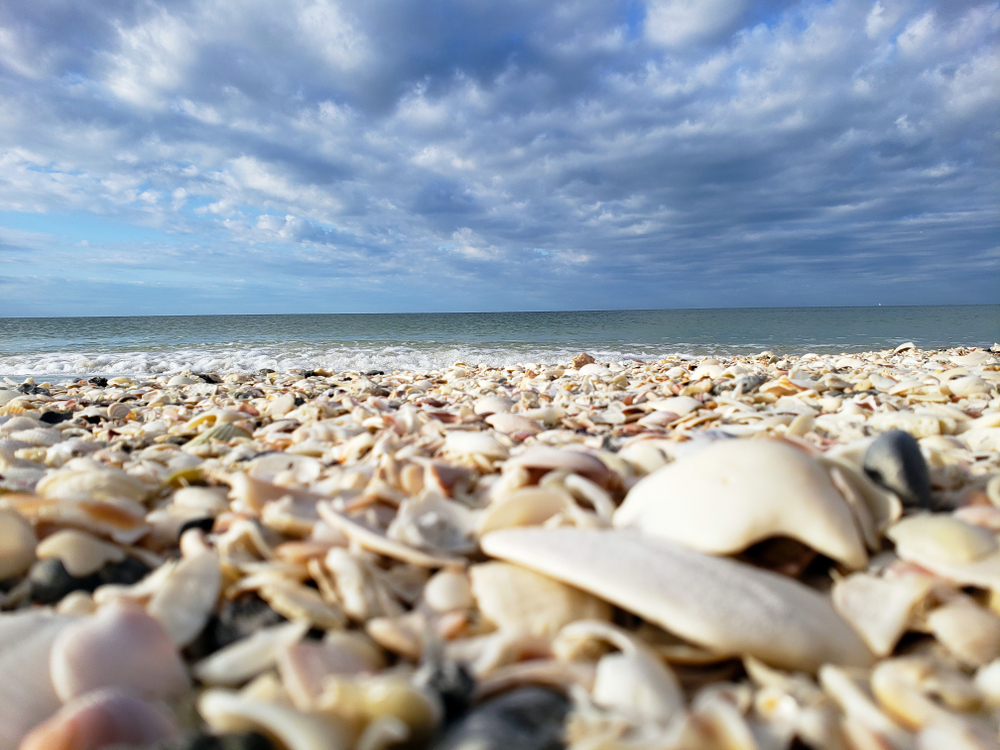
Photo Credit: RaDen_Photos
Southwest Florida sits at the receiving end of Gulf currents that push shells toward shore, and the gentle slope of the beaches lets brittle shells settle instead of breaking apart. The result is a coast where thousands of shells accumulate along the wrack line, the dark seam of seaweed and debris left behind by the last high tide.
Estero Island is one of the best places on this stretch of coastline to go shelling. Walk the waterline on a winter morning, and you’ll soon see why people drive down to Fort Myers’ beaches for a week and barely leave the sand.
Types of Shells You Will Find in Fort Myers Beach
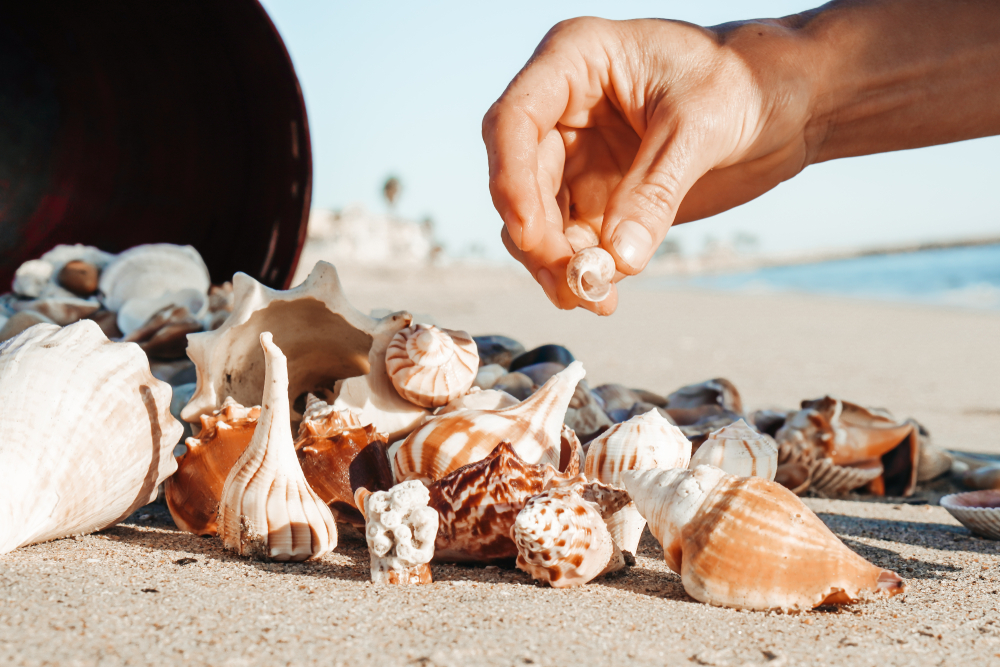
Part of the fun is learning what you’re holding. The natural colors, shapes, and sizes of these seashells vary enormously, and you’ll often find something totally different if you go back to the same beach multiple times.
These are a few of the shells you’ll likely find on Fort Myers Beach if you poke around long enough.
Common Shell Finds
- Coquinas: Tiny, fan-shaped bivalves in pinks, yellows, and purples that burrow into wet sand as waves recede
- Scallops and cockles: Ridged, symmetrical shells in white, orange, and brown, among the easiest to spot
- Olive shells: Smooth, glossy, and cylindrical, often half buried where the water meets dry sand
- Jingle shells: Thin and translucent with a pearly finish, light enough to rattle in your bag
The Prize Finds
- Horse conch: Florida’s official state shell, orange inside and occasionally found in impressive sizes
- Lightning whelk: A large spiral shell that opens to the left, named for the streaks of color across its surface
- Florida fighting conch: Compact, heavy, and warm brown, common along the south end
- Tulip shells: Sleek and banded, one of the most collected shells in the region
What to Leave Behind
Not everything on the beach is ready to leave the sea! Live sand dollars are brown or gray and fuzzy with tiny moving spines; dead ones are white and smooth. If it’s still alive, leave it alone. Living starfish and any shell with a hermit crab inside also belong on the beach, not in your bag.
Best Beaches for Shelling in Fort Myers Beach
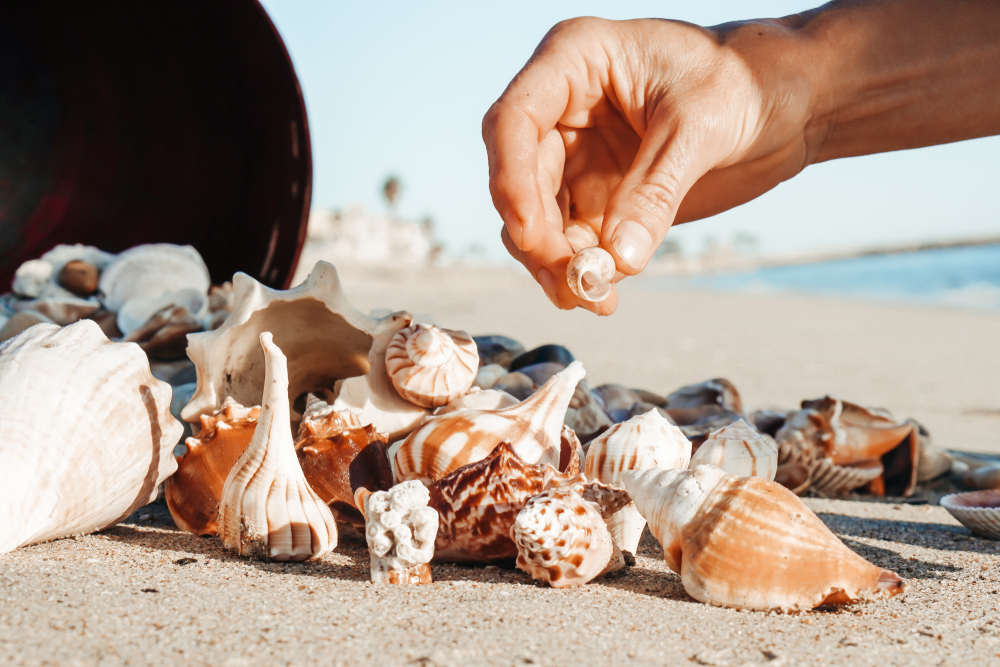
Photo Credit: Nataly Gejdos
You can find shells along most of the island, but a few spots consistently out-produce the rest.
South End Near Big Carlos Pass
- Location: Big Carlos Beach
- Best for: Whole, unbroken shells and quiet early mornings
Passes move water, moving water moves shells! The stretch of beach running toward Big Carlos Pass is the most reliable shelling on the island, and it stays uncrowded well into the season.
Booking a South Island rental will put you within a short walk of this lucrative body of water. Check out our guide to the best areas in Fort Myers Beach to see how the South Island compares to other neighborhoods.
Bowditch Point Park
- Location: Bowditch Point Park
- Best for: Combining shelling with birds and back bay views
The island’s north tip is where the Gulf meets Matanzas Pass, and the mix of currents drops shells on both sides. It’s also a designated birding site, so bring bring binoculars to watch wildlife.
Lovers Key State Park
- Location: Lovers Key
- Best for: A longer walk with more nature and fewer people
This state park sits just across the Big Carlos Pass from the south end of the island, and is an easy drive no matter where you’re staying in Fort Myers. To reach quieter sand with less shelling competition, walk south along the shore and away from the main beach access point.
San Carlos Bay-Bunche Beach Preserve
- Location: Bunche Beach Preserve
- Best for: Low tide flats, wading birds, and unusual finds
Bunche Beach is a mudflat rather than a classic white sand beach, which is exactly what makes it so intriguing for shellers. The flats are shallow and accessible, but can be full of sharp surprises, so water shoes matter more here than anywhere else on this list.
Worth the Drive: Sanibel, Captiva, and the Boat-Only Islands
If you don’t mind driving a little further afield, there are great shelling opportunities on Sanibel and Captiva Islands, both of which sit around 35 to 45 minutes north of Fort Myers Beach. Just keep in mind that you need to account for causeway traffic in your driving time.
Sanibel Island earned the region its reputation as a world-class shelling destination, Blind Pass, Bowman’s Beach, and Lighthouse Beach Park are all open and worth an early morning drive. Turner Beach on Captiva Island sits on the north side of Blind Pass and is a classic sheller’s stop if you are already up that way.
To reach the ultimate sheller’s paradise, you need to first board a boat. Several captains run shelling tours out of Fort Myers Beach that drop you on small islands with no road access at all. The same crews often run fishing trips out of the same docks.
Another option is to visit Cayo Costa State Park, which is a sheller’s dream guaranteed to be full of unique finds. It’s only accessible by private boat or ferry, but it has miles of beaches and acres of forest to explore, so pack a picnic and make a day of it.
The Best Time to Go Shelling
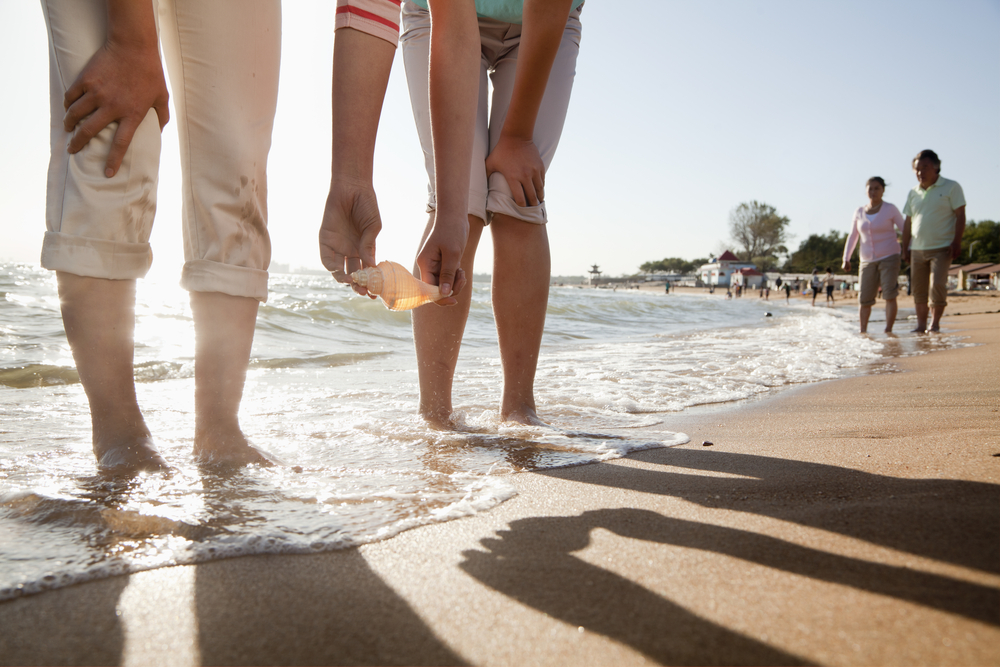
Photo Credit: XiXinXing
Timing beats location almost every time. A mediocre beach at the bottom of a low tide will be far more lucrative than a great beach at high tide.
Aim for the hour before and after low tide, when the widest band of shoreline is exposed. Check a local tide chart the night before, since low tide shifts by roughly an hour each day.
Early morning is the sheller’s hour. The light is low, the sun is tolerable, and you’ll get to walk fresh ground before anyone else has picked it over.
Although you’ll find shells at any time of year, winter is peak season for shelling in Fort Myers. Cold fronts and storms churn the Gulf and push shells onto the beach, so the day or two after rough conditions often yields the best shelling.
Shelling Rules in Fort Myers Beach: What You Can Take Home
The rules here are simple, but they do matter. Lee County, which includes Fort Myers Beach and Sanibel, prohibits taking live shells. Let’s break it down a bit further so there’s no confusion on the sand:
- Empty shells: Free to collect, no license required
- Live shells: Prohibited, with limited exceptions for coquina, oysters, hard clams, and sunray venus clams, which require a Florida saltwater fishing license
- Live sand dollars and sea stars (starfish): Must stay on the beach
- Hermit crabs: Leave it where you found it; the crab is the shell resident
To check a shell, turn it over and look at the opening. A foot, a hard trapdoor called an operculum, or any movement means it’s occupied. If something’s living inside, put it back in the water where it belongs.
What to Bring and How to Clean Your Shells
Packing for a shelling trip to the shore is quick and easy. All you really need to pack is:
- A mesh bag that drains as you walk and saves you from carrying a pound of wet sand home.
- Water shoes to protect your feet on shell beds
- A headlamp in case low tide lands before sunrise
Once you’ve brought your finds back to your rental, make sure to clean them properly instead of tracking all the sand and surf inside. Rinse everything outside, then soak your finds overnight in the kitchen sink to loosen sand and salt. Spread them on the balcony to dry in the sun for a day, then they’ll pack nice and clean.
Plan Your Shelling Trip to Fort Myers Beach
The best shelling happens before breakfast, which makes where you stay part of the strategy (unless you like waking up well before dawn). A rental near the south end or the north tip of the island can put you on the sand at low tide without having to drive.
Book a Fort Myers Beach vacation rental close to your favorite stretch of shore and prepare to hunt for natural treasures on Florida’s coastline.